

The Dead Follow the Hull

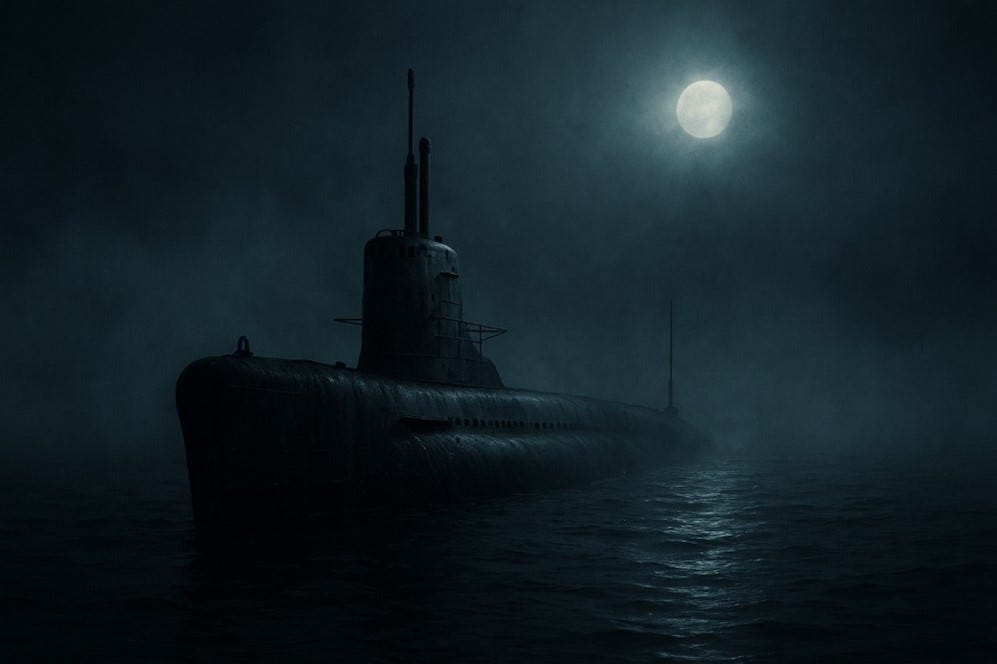
It was early October when the Jarvis girl found me again. Fog hung low that night, the kind that makes even Michigan feel like the edge of the Pacific.
Twenty-eight years had passed since we split — long enough for the memory to fade but not the nickname. I was at the Rochester Corner Bar pretending to edit a story when my phone buzzed:
Hey. My dad really wants to talk to you.
He has something for you. Says it’s important.
Her dad.
Jarvis. I never call him by his first name.
USS Remora, 1963–65.
A real diesel-boat sailor.
A man who once looked at me with the kind of skepticism only an old submariner can cultivate.
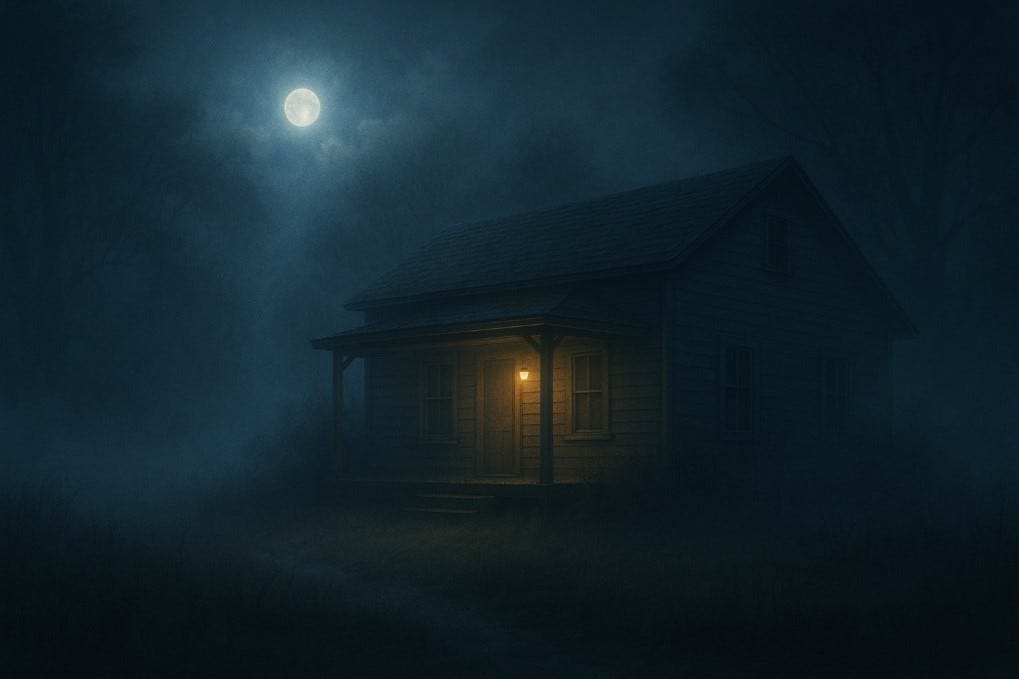
I drove to his place north of Clarkston, through rain and low fog that clung to the ground like spilt ballast air. His garage door was cracked open. A faint yellow light inside. The smell of coffee and cold metal.
I knocked.
He didn’t turn. Didn’t need to. Old submariners can feel presence the way they feel depth.
“Door’s open, Whaledawg.”
Not Whaley.
Whaledawg.
He said it like he’d been waiting decades to use it again.
He sat at a workbench with an old Navy sea bag at his feet and a metal box on the table. The box was Navy gray, dented on the edges, the kind of metal that looks like it’s seen depth—or wanted to. His hands shook — age or something heavier.
“You know why you’re here,” he said.
“I don’t.”
“You’re a writer now, so Kelli tells me. And you were a submariner. That’s rare. Damn rare. Means you can carry something I’ve carried too long.”
He opened the metal box.
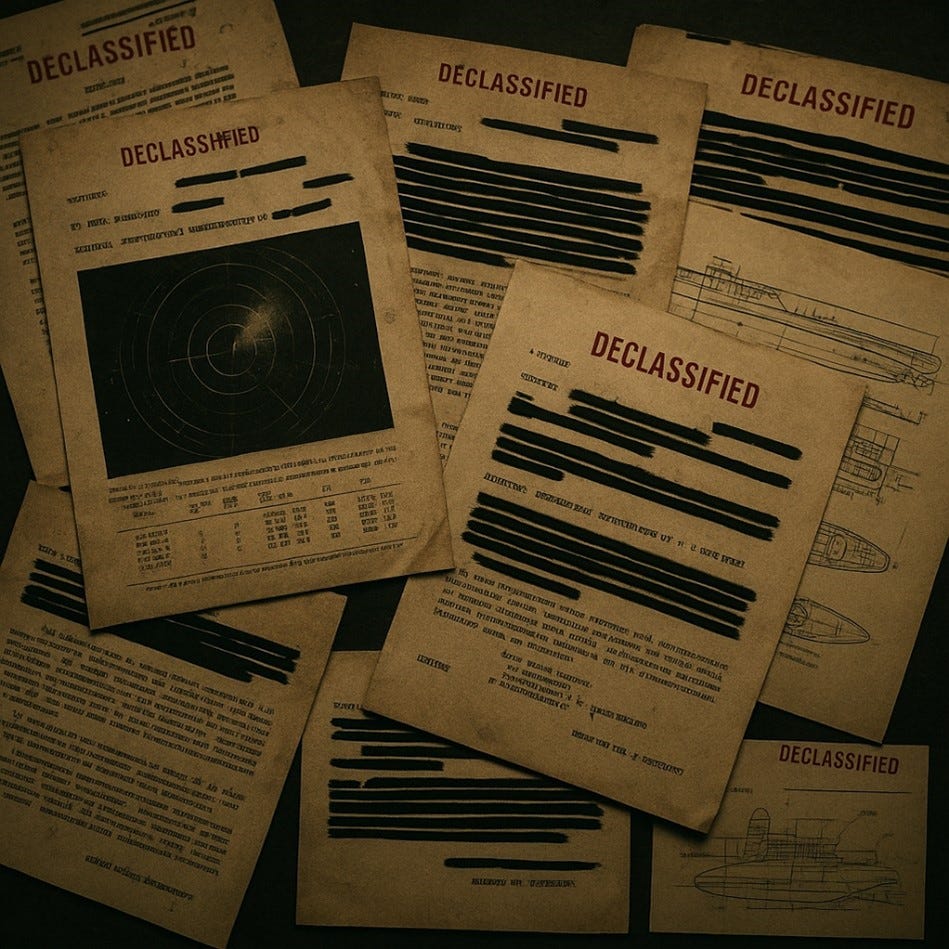
Inside were classified-looking papers, brittle maps, sonar printouts, deck logs, and a fragment of twisted hull steel that looked… scorched.
“I’ve been researching the GUPPY boats for sixty years,” he said. “Every one of ’em. Where they were built. What they sank. Where the steel went during the conversions.”
He tapped the steel fragment with a stiff finger.
“And what the ocean kept.”
I frowned. “You make it sound like—”
He cut me off.
“You ever hear a tapping on the hull, Whaledawg? Ever get a cold spot in a compartment that shouldn’t be cold? Ever see a face reflected behind you that wasn’t there?”
I didn’t answer.
He pushed the box toward me.
“My boat was USS Remora. She descended from a line of killers — boats that sent hundreds of Japanese sailors to the bottom.”
A long pause.
“The dead don’t stay where they sank. They cling to the hulls that killed them. I’ve spent my whole life tracking it. You need to take this now. I’m out of time.”
“Why me?”
Jarvis didn’t smile, but his eyes softened.
“Because you’ve already heard them.”
He slid the Sea Lion hull fragment into my hands. It felt warmer than metal should. It pulsed faintly in my hand, like it still remembered pressure.
“Your watch starts tonight, Whaledawg.”
Scene 2
I didn’t open the box that night.
I set it on my kitchen table, poured bourbon, and circled it like it was a live Mark 48 torpedo. At sunrise, unable to stand the weight of its presence, I unlatched the lid.
The hinges groaned like stressed bulkheads — the sound steel makes when it remembers depth.
Inside:
faded memos, war-era charts, hand-annotated diagrams, and dozens of typed pages with GUPPY conversion notes that had nothing to do with hydrodynamics.
The first document was stamped:
Bureau of Ships — RESTRICTED — 1954
I read:
SUBJECT: Residual Phenomena, Hull Section Group 41, USS SEA LION (SS-315)
– Temperature drop in forward trim tank
– Acoustic patterns resembling human tapping
– Voices detected in unpowered conduits
– Shadow movement in torpedo room
Note: Phenomena coincide with wartime sinking of IJN battleship KONGŌ, 21 Nov 1944.
Recommendation:
Remove affected hull plates. Dispose at depths >1,000 fathoms.
My skin prickled.
The next document listed similar anomalies on USS Segundo, USS Atule, USS Sea Poacher, and others — every one a GUPPY boat that had sunk Japanese sailors.
I reached the bottom of the pile where an object wrapped in cloth waited like a relic.
The hull fragment.
When I touched it, it vibrated — a faint hum like far-off screws in deep water.
A memory hit me.
Not gently.
Not voluntarily.
Scene 3
Suddenly I wasn’t in my kitchen. The room tilted—not physically, but the way it feels before a depth charge hits.
I was 23 years old again.
Back on the boat.
Back in the maneuvering room.
Steam lines roaring.
Electric hum vibrating through deck plates.
That familiar tang of metal, sweat, and fear.
We were running a high-speed drill.
Reactor at full power.
Maneuvering room officer and Master Chief barking.
Me sweating through my poopy suit.
Then the sound.
A knock.
Deep.
Hollow.
Two taps.
The air thinned. Menacingly. Like something inside the boat inhaled. Everyone froze a fraction of a second before—
BOOM.
An arc flash exploded across the switchboard.
Lights died.
Alarms screamed.
The boat shuddered like something huge had grabbed the hull.
And in the pitch-black silence immediately after,
when even Master Chief didn’t breathe,
I heard a voice:
“Tasukete.”
Help me.
Later, I told myself it was shock. But the voice had been calm—too calm for a man dying in steam and darkness.
I had dismissed it for decades, my unique PTSD you might say.
Shock.
Adrenaline.
Imagination.
Except now, holding this haunted piece of WWII steel, the memory sharpened with terrible clarity.
Before the explosion, I had seen a silhouette behind the gauges — a small figure, water dripping off it, where no one stood.
I had forgotten that.
Or buried it.
The flashback released me as quickly as it struck.
Back in my kitchen.
Breathing hard.
The steel fragment cold as deep Pacific water.
My phone buzzed with a text from an unknown number:
He gave you the wrong piece.
Some things shouldn’t be touched.
Then another:
The dead follow the hull, Whaledawg.
They always have.
I looked at the steel again.
Condensation ran down its scorched surface like a tear.
Jarvis hadn’t just given me research.
He had handed me the burden he’d carried alone since 1965.
And now it was awake.
Scene 4
I didn’t sleep that night.
The steel fragment sat on my counter like an exposed nerve, and the text messages replayed in the back of my skull until dawn.
By mid-morning I was back in Clarkston.
Jarvis’s truck was in the driveway, same as last night, but the house felt different — too still, as if the walls were holding their breath.
I knocked.
No answer.
I tried the door.
Unlocked.
“Jarvis?” I called.
Silence.
A low hum from somewhere deeper inside the house.
Not electrical.
Something else.
The living room was tidy in that old-sailor way — everything squared away, nothing out of place. Except the metal box from the night before. It sat open on the floor, half-empty. As if he’d pulled one last thing out after I left.
A faint light glowed down the hallway.
Basement door cracked open.
Of course he’d be in the basement.
If you want to understand a submariner, look where he goes when he’s alone:
Underground.
Below decks.
Back toward pressure.
I descended the stairs.
And walked straight into a lifetime of obsession.
The basement wasn’t a basement. It was a shrine. A crime scene. A war room built by a man fighting ghosts no one believed in.
It was an operations center.
A tactical plotting room of the dead.
The far wall held a massive map of the Pacific, yellowed with age.
Red X’s marked hundreds of sinking sites like blood splatter across the Pacific — battleships, destroyers, merchantmen, submarines — all the places where American boats had sent IJN crews into the deep.
Blue lines traced GUPPY modernization yards: Mare Island, Portsmouth, Charleston.
Black pins marked every GUPPY boat that reported “incidents” after conversion.
There were dozens.
Beneath the map, a long folding table was covered in artifacts:
GUPPY conversion schematics annotated in Jarvis’s shaky hand
Wartime patrol reports of Sea Lion, Segundo, Atule, Sea Poacher, and others
Newspaper clippings: UNEXPLAINED ACCIDENT ON TURKISH SUBMARINE
Sonar tracings labeled “PHANTOM CONTACT?”
Deck logs with entire lines blacked out — not by censors, but by Jarvis himself
A folder labeled “Residual Events — Remora, 1964 (My Watch)”
I swallowed hard.
He had been tracking this for sixty years.
I moved deeper into the room.
A corkboard displayed photographs of the GUPPY fleet — glossy prints of boats at sea, drydocked during conversion, or tied up overseas after being sold.
Under each photo, Jarvis had written notes:
SEA LION — voices in trim tank
SEGUNDO — footsteps overhead in drydock
ATULE — sonar signature of sunken vessel
PAMPANITO — cold spot in generator room
REMORA — unexplained tapping, 1965
Then I found the section that made my stomach drop.
Pinned in a tight cluster were the names of Japanese ships sunk by each GUPPY’s predecessor hull — Kongō, Urakaze, Tsushima Maru, multiple destroyer escorts, dozens of merchantmen.
Under that cluster:
“THE DEAD FOLLOW THE HULL.”
And under it, in smaller letters:
“SINKING SITES = SPIRIT DENSITY ZONES
GUPPY ROUTES THROUGH THESE ZONES = INCREASED ACTIVITY”
He’d mapped the ghost farms.
Every one of them.
A small metal desk lamp glowed in the corner.
Under it sat a final binder, thicker than the others.**
A note taped to the cover:
FOR WHALEDAWG
CARRY THE WATCH
DO NOT LET THEM DIE UNHEARD
My throat tightened.
Jarvis hadn’t just researched the GUPPY hauntings.
He had curated them.
Protected them.
Catalogued every unexplained event like a man preserving evidence of an invisible war.
And now he had passed it on.
I opened the binder.
Inside were interviews — actual interviews — with diesel boat sailors from the ’50s and ’60s. Jarvis’s handwriting filled the margins.
“Heard weeping in operations compartment.
Thought it was one of ours. Wasn’t.”
“Sonar picked up destroyer screws. Shouldn’t have been possible. That ship sank in ’44.”
“Something grabbed my ankle in the lower flats.”
“The boat refused to dive. No mechanical issue. It just… wouldn’t.”
Then — a page with a red marker:
REASONS FOR GUPPY CONVERSION (THE REAL ONES)
Isolate haunted steel
Break spiritual continuity in keel lines
Remove compartments with high “residual densities”
Replate hull to purge absorbed shock trauma
Retire boats that remained “tainted”
I let the page fall.
This wasn’t the Navy modernization story anyone knew.
This was the secret war behind it.
The war with memory.
With remorse.
With the dead.
The deeper I walked, the more the room felt like a mind laid bare—brilliant, cracked, and drowning in secrets.
I ran a hand over the desk — the steel cool beneath my palm — and found one last piece of paper tucked beneath the binder.
Jarvis’s handwriting.
Fresh.
Wavering.
**Whaledawg —
If you’re reading this, it means I’m done.
The dead know me too well now.
They want a new listener.
The ocean has chosen you.
Finish what I could not.
— J.
I looked around the basement — at the research, the maps, the lifetimes of obsession — and suddenly realized:
Jarvis wasn’t handing me a project.
He was handing me a haunting.
A final creak sounded above the basement ceiling.
A footstep.
Slow.
Deliberate.
But Jarvis wasn’t upstairs.
And I wasn’t alone.
I turned toward the stairs.
Scene 5
When I left Jarvis’s basement, the cold outside hit me like surfacing from a deep dive — sharp, disorienting, too bright. I locked his door out of habit, though habit didn’t mean much anymore.
The war room still clung to me.
Paper dust under my fingernails.
Ghost maps in my head.
Jarvis’s note burning a hole in my chest.
I walked to my truck.
That’s when I noticed the SUV.
It was parked across the street, engine idling low.
Tinted windows.
Government-black.
The kind of vehicle that looks ordinary because it’s meant to.
I felt eyes on me.
I opened my truck door.
My phone buzzed.
A text from an unknown number — not the same one as before.
“Whaledawg. Step away from the house.”
Another message stacked immediately after:
“Do not remove any additional materials.”
The hairs on my arms lifted like someone had opened a hatch to an Arctic thermocline.
The SUV door opened.
Two men stepped out — not in suits, not in uniforms, but in that nondescript tactical casual that says we work for someone important, and we don’t need you to know who.
The taller one spoke first. There was a small patch on his jacket that read only: “03”. No agency. No name. Just numbers.
“Sir, we’d like to ask you a few questions about John Jarvis.”
They didn’t ask how I knew Jarvis. They already knew.
My ribcage tightened.
“He’s not here,” I said.
“We know,” the man replied, as if he were confirming weather.
“We also know what he gave you.”
They looked at my hands.
My pockets.
My truck.
Not hostile, but clinical.
Like inspectors at a reactor drill.
“Who are you?” I asked.
The shorter one smiled without warmth.
“We’re with a department that does not need a name.”
I exhaled. “That’s comforting.”
He ignored the sarcasm.
“Mr. Jarvis has been on our radar for several decades. He maintained contact with sailors from multiple navies. He requested classified documents repeatedly. He tracked vessels sold to foreign governments.”
He paused.
“And recently, he attempted to acquire material from a restricted salvage site in the Philippine Sea.”
My blood went cold.
“You think he stole something?”
“We think,” the man said slowly, “that he uncovered something.”
He stepped closer.
“And now you have it.”
Lightning cracked somewhere far off — or maybe it was just the blood in my ears.
“You’re mistaken,” I said, too quickly.
The man cocked his head.
“Whaledawg. We’re not here to arrest you.
We’re here to protect you.”
“From what?”
“From exactly what Jarvis spent sixty years studying.”
A beat.
“The things that cling to the hull.”
My stomach dropped.
Before I could answer, the taller one lifted a device — handheld, metal, blinking — and aimed it at my chest like a scanner.
The device clicked twice.
He looked at the reading.
Then he lowered it, and the mask of professional calm slipped for just a moment.
“Sir. We’re detecting residual energy on you.”
“Residual what?”
The short one spoke softly now.
“Something followed you out of that house.”
I glanced back toward the basement door.
Then the tall one said:
“Whaledawg… where is John Jarvis?”
And that’s when I knew:
They didn’t come for the steel.
They came because Jarvis was missing.
And the ghosts weren’t hiding anymore.
Scene 6
The taller agent was still waiting for my answer when it happened.
A sound rolled across the street — low, metallic, wrong.
Not thunder.
Not a car backfiring.
A ping.
A sonar ping.
Soft at first.
Barely audible.
But unmistakable to anyone who’s ever ridden a boat below periscope depth.
The two agents stiffened.
“You hear that?” I asked.
They didn’t answer, because the SUV answered for them.
The glass bowed inward, the way a sub hull groans at crush depth.
The shorter man hissed, “Not again—”
The taller man grabbed my arm.
“Whaledawg. Get in the vehicle. NOW.”
But the SUV lurched as if kicked by a giant from underneath.
The suspension buckled.
The alarm chirped, then died instantly.
Lights flickered.
Something hit the undercarriage with a hollow, resonant BOOM.
A hull strike.
My blood ran ice cold.
Another ping echoed, louder this time — coming from nowhere and everywhere at once.
The agents spun toward the house.
The basement window — the one leading to Jarvis’s war room — was vibrating.
Actually vibrating.
The short agent muttered, “Containment breach—”
Before he finished the sentence, a blast of freezing air shot up from the window well like a breached ballast tank venting its last breath.
The grass around the foundation frosted white in seconds.
“INSIDE THE VEHICLE!” the tall agent yelled.
“Screw your vehicle,” I snapped. “Something’s under it.”
He reached for me again — but that’s when we all heard it:
Knock.
…
Knock.
Two hollow taps from underneath the SUV.
The same rhythm from my explosion.
The same rhythm Jarvis wrote about.
The same rhythm the dead used when they wanted to be heard.
The taller agent froze.
“Shit,” the shorter one whispered. “It found us.”
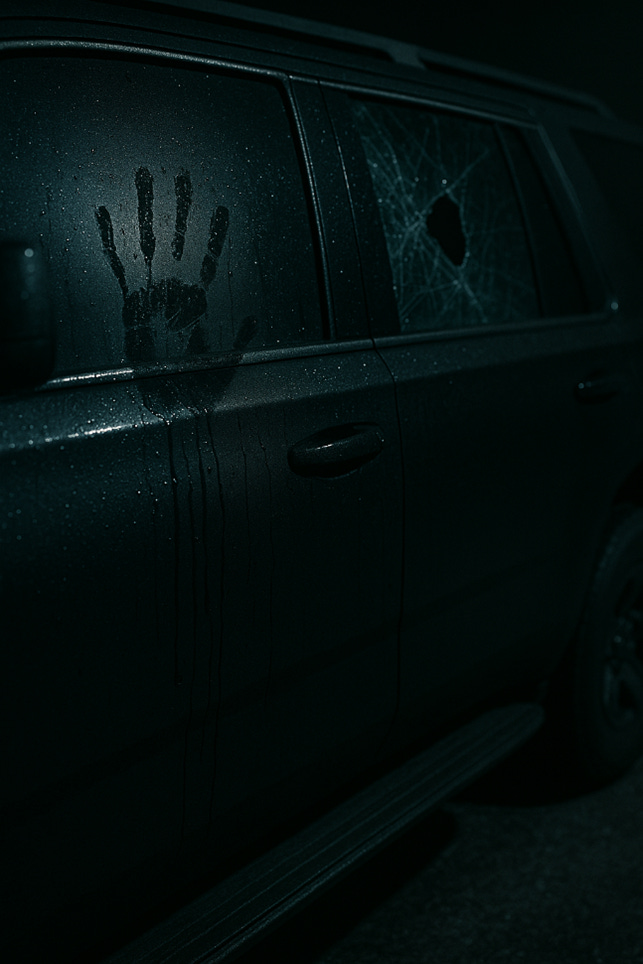
The SUV’s headlights exploded outward, showering the street in glass.
A shape — not visible, but suggested by shifting air and heat distortion — moved under the vehicle like a shadow in water.
The metal frame buckled upward, denting from below, as if a hand the size of a man were pushing against the floorboards.
The taller agent’s voice cracked.
“Whaledawg — MOVE!”
I didn’t need convincing.
I bolted toward my truck.
The shorter agent sprinted too — until an icy mist curled around his ankles and yanked him backward with such force his feet left the ground.
He screamed — high, primal — before he vanished behind the SUV, dragged into the dark space beneath it.
His scream cut off not like he was dragged away—but like someone had closed a hatch around the sound.
The taller agent skidded to a stop.
“NO—NO NO—Jesus Christ—”
We locked eyes.
“I told him not to touch the steel fragment,” he whispered, trembling. “They can sense it. They can’t tell us apart.”
Another ping echoed.
Louder.
Closer.
A second later, the SUV’s roof caved in, crushed by something enormous and unseen.
The taller agent pulled a weapon — not a gun, something more like a handheld emitter — and pointed it toward the collapsing vehicle.
But before he could fire, the mist surged toward him.
“RUN, WHALEDAWG!” he shouted.
I didn’t think.
Didn’t argue.
Didn’t look back.
I sprinted toward my truck with government-grade adrenaline.
Fumbled keys.
Got the door open.
Behind me:
A wet, cavernous, drowning sound — like air escaping a sinking ship.
Then silence.
I slammed the door, jammed the keys into the ignition, and the engine roared alive.
As I peeled out, tires spitting gravel, I caught one last glimpse in the rearview mirror:
The SUV’s undercarriage lifted off the ground —
as if something was pulling it down into a body of water that wasn’t there.
The street rippled.
Reality buckled.
And for the briefest second, I saw shapes moving beneath the asphalt — shapes like men struggling underwater.
Then they were gone.
I floored the truck.
Behind me, Jarvis’s quiet suburban street looked like the surface above a wreck site.
The text notification dinged on my phone.
Unknown number.
Same one from before.
“YOU CAN’T OUTRUN THE DEEP.”
Static crackled through the truck’s speakers even though the radio was off.
A whisper followed.
Japanese.
Soft.
Wet.
Drowned.
And then:
“Whaledawg.”
Not my imagination.
Not my memory.
A voice.
A dead sailor’s voice.
Calling me by name.
Scene 7
I drove hard for ten minutes before pulling into a deserted rest stop off a two-lane county road. I killed the engine, chest heaving, heart punching my ribs like it was trying to break through.
The truck ticked as the engine cooled.
The world went too quiet.
I gripped the wheel.
Knuckles white.
Trying to get air back in my lungs.
Then—
THUD.
Something slammed onto my hood.
I jerked back, nearly smacking my head on the rear window.
A silhouette leaned over the windshield.
Human.
Breathing.
Wounded.
The taller agent.
His face was gray, drenched in sweat, eyes wide with animal fear. He slid off the hood and collapsed onto the pavement beside the truck.
For a second I just stared, frozen.
Then instinct kicked in.
I jumped out and ran to him.
He grabbed my jacket with a shaking hand.
“Don’t—don’t go back.”
He coughed, gagged, spit black phlegm onto the ground.
“They’re still there.”
I crouched beside him.
“What the hell happened? How did you get out?”
He blinked hard, focusing on me through shock.
“It let me go.”
That made my skin crawl.
“No—it pushed me out. Like ejecting ballast. Like I wasn’t what it wanted.”
The agent shuddered, eyes unfocused.
“It didn’t just let me go,” he whispered. “It threw me. One moment I was under the SUV… the next I was falling through cold water that wasn’t water. Pressure hit me from every direction and then—” He coughed hard, seawater dribbling down his chin. “I woke up on your hood.”
He looked at me with terror.
“Whaledawg… it sent me to you.”
He looked up at me with a dawning realization that made my stomach drop.
“It wanted you.”
Before I could respond, he doubled over and retched again — a mix of seawater and bile.
That shouldn’t have been possible.
He hadn’t been near water.
Unless—
He wiped his mouth with a shaking hand.
“They pull you under,” he said. “But not physically. Not… not at first.”
He shuddered.
“They pull your mind under. Drown you in memories that aren’t yours. Echoes from the hulls.”
His breathing was ragged. I hauled him up and leaned him against the truck.
“What about your partner?”
The agent stared at the asphalt like he was staring through it, into some black depth miles below.
“He’s gone.”
A beat.
“They drown you fast if you panic.”
A cold wind pushed through the rest stop, bending the trees in one direction — toward the east, toward the ocean, though we were nowhere near it.
The agent’s eyes snapped toward the blowing branches.
“We can’t stay here. They follow electromagnetic residue. Whatever touched you in that house? It marked you.” He struggled to his feet. “We need to get distance.”
“We?” I said.
I didn’t mean for the sarcasm to come out, but it did.
He gave a bitter, humorless half-smile.
“I just survived a Category 5 haunting event, Whaledawg. I’m not going anywhere alone.”
I opened the truck door for him.
He climbed in, shaking, dripping seawater onto my floor mats.
I slid into the driver’s seat and started the engine.
We drove in silence for a long mile.
Finally, he spoke.
“You have questions.”
“No kidding.”
He nodded slowly.
“Then let’s start with this: what you saw back there… that wasn’t a ghost.”
I shot him a glare.
“And what would you call it?”
He exhaled.
“A residual aggregation. Multiple souls bound by common trauma. They move like a single organism. They hunt like one, too.”
My grip tightened on the wheel.
He continued.
“The GUPPY hulls weren’t just haunted. They were—contaminated. With energy. With memory. With whatever happens to men who die screaming under a thousand feet of water.”
“And the Navy knew.”
“Since 1946.”
He looked out the window.
“The government doesn’t care about ghosts, Whaledawg. They care about control. And containment.”
A pause.
“And right now? We have neither.”
I felt the weight of Jarvis’s box in the backseat like a live warhead.
The agent saw me look at it.
“That’s why they wanted Jarvis. That’s why they want you.” He swallowed hard. “You two weren’t just researchers. You were… sensitive to it.”
“Meaning?”
He turned to face me fully now.
“Meaning… they can reach you.”
My pulse stumbled.
He leaned closer.
“And they already have.”
As if on cue, the truck’s speakers crackled with static.
No radio was on.
The static pulsed.
Then under it — faint, drowned — a whisper.
Japanese.
A single word.
I didn’t know the translation, but the agent did.
His face went white.
“It means… ‘transfer.’”
The static cut out.
Silence.
The agent swallowed hard.
“They’re choosing you, Whaledawg.”
I didn’t answer.
Not because I didn’t believe him.
But because deep down in the base of my spine — the place where sailors feel depth and pressure before any gauge registers it — I knew he was right.
I had felt the knock before.
On my own boat.
Years ago.
This wasn’t new.
This was the continuation of something that had started a long, long time ago.
“Okay,” I finally said, gripping the wheel. “Then what do we do next?”
The agent stared straight ahead.
“We go to someone who can help.”
“Who?”
His jaw tightened.
“The only man alive who’s ever survived a full aggregation attack.”
“Who is he?”
The agent looked at me.
“An admiral,” he said softly. “A Cold War diesel boat skipper. And he’s been in hiding for thirty years.”
We drove into the dark.
Scene 8
We drove north for two hours, the agent slumped against the window, breathing shallow, still dripping occasional flecks of seawater like the ghost of a man freshly pulled from the deep.
He hadn’t said a word since the whisper from the radio.
Not that I was eager for conversation.
My own thoughts churned the same way the ocean does right before the weather turns — full of stealth currents and unspoken threats.
The road narrowed.
Forest closed in on both sides.
The GPS stopped working miles back.
“Where are we going?” I finally asked.
The agent swallowed, throat tight.
“To the only man who’s ever survived a full aggregation attack.”
“You said he was a Cold War skipper.”
“Diesel boat. Pacific patrols. He saw things Jarvis only read about.”
“And why’s he hiding?”
The agent gave a brittle, exhausted laugh.
“Because he told the truth.”
That shut me up.
We turned off the highway onto a gravel road.
Tall pines formed a dark corridor overhead.
Mist gathered low to the ground, spreading across the road like a thin, creeping flood.
The agent straightened a little, wincing.
“Just keep driving. He won’t come out unless he knows we’re alone.”
Comforting.
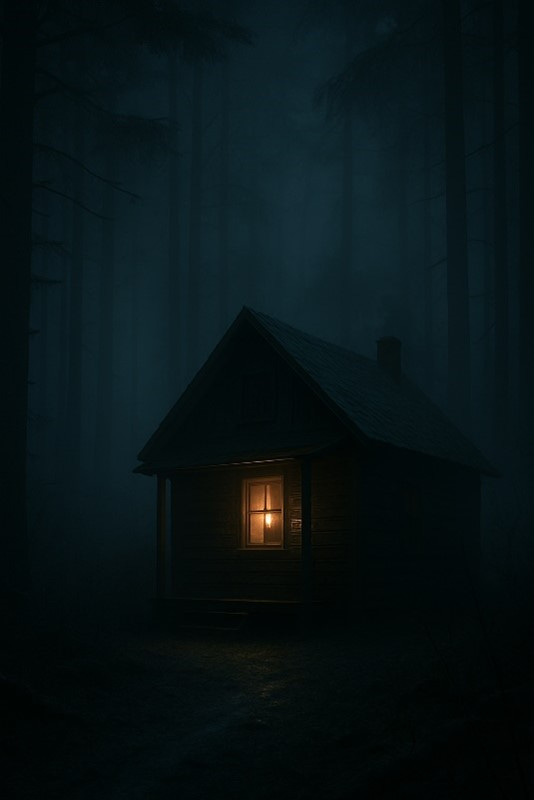
After another mile, the trees opened into a clearing — a small cabin at the center, built from old timber, roof rusted, a single yellow porch light glowing like an eye that refused to close.
No vehicles.
No footprints.
No life.
But not abandoned.
The agent pointed weakly.
“There. Stop there.”
I parked.
The engine ticked.
Silence settled in around us like weight.
No wind.
No birds.
No forest noise at all.
The dead quiet of deep ocean water.
“You coming?” I asked him.
The agent tried to move — couldn’t.
His hand trembled violently.
“I’ll stay here,” he whispered. “They’re… closer to me now. I shouldn’t cross his threshold.”
That didn’t feel symbolic.
It felt like a rule.
Or a warning.
“Just knock,” he said. “He’ll know who you are. He’s been expecting this.”
Expecting me?
That did nothing good for my pulse.
I stepped out of the truck.
Cold immediately crawled across my skin — real cold, not Michigan cold.
Pressure cold.
Depth cold.
I walked toward the cabin.
Each footstep on the porch boards echoed like metal on metal.
Like walking across a submarine’s deck plate.
I knocked once.
Silence.
Knocked again.
The porch light flickered.
Inside the cabin, something shifted — a chair leg? A boot? A man standing?
I knocked a third time.
This time the sound didn’t echo of wood.
It echoed like it was traveling down a steel corridor.
Then the door unlocked from the inside.
Slowly.
Deliberately.
It creaked open half a foot, stopping as if someone held the edge with two fingertips.
The interior was dark except for the faint glow of a lantern.
And there he was.
An older man.
Tall but stooped from years inside cramped steel tubes.
Hair white.
Face carved by salt and storms.
Eyes steady, sharp, and too knowing.
He looked at me as if he’d been waiting decades. Standing with the posture of a man who’d spent half his life underwater—rigid spine, wary eyes, the gravity of depth clinging to him.
“You’re late,” he said.
I opened my mouth to explain, but he raised a hand.
“And you brought one of them with you.”
My heart hammered.
“Them who?”
He stepped forward into the lantern light — enough for me to see the faint scars around his temples, like old burns.
Or old pressure trauma.
“You don’t know yet,” he said. “Good. Better that way. For now.”
Behind me, I heard the agent groan.
The admiral’s eyes darted past my shoulder.
“They marked him,” he muttered. “They always mark the ones who get too close.”
He looked back to me.
“And you, Whaledawg — you opened the box.”
“How do you know my name?”
He didn’t answer.
Instead he opened the door wider.
“Bring in the files. Leave the man. And don’t cross my threshold without the steel fragment. It’s the only thing they fear.”
I stared at him.
“You’re the admiral Jarvis wrote about.”
“No,” he said quietly. “I’m the admiral Jarvis warned about.”
Behind us, the trees rustled with a sound like water moving through them.
Not wind.
Not animals.
Water.
Salted, distant, impossible water.
The admiral stepped aside, eyes narrowing.
“Come inside, son. The deep has followed you long enough tonight.”
I hesitated — just one heartbeat.
Then crossed the threshold with the steel fragment in my hand.
The admiral shut the door behind me.
The lock clicked.
And the dark felt alive.
The steel remembers.
The dead follow.
And the next chapter is already rising from the deep.
Subscribe for free so you don’t miss it.
This is incredible storytelling! The way the GUPPY hull research becomes the framing device for supernatural horror is genuinely original. The "residual aggregation" concept—souls bound by common trauma acting as one organism—is way more terrifying than typical ghost stuff becuz it has that tactical, operational feel like you're dealing with an actual tactical threat not just spooky vibes. The detail about Jarvis tracking "spirit density zones" where sinking sites overlap with GUPPY routes is chilling, kinda turns naval history into a hounted map.
Glad you loved it. Coming out in paperback, ebook, and hardcover by March 1, 2026